We're reducing the skills deficit, closing the network gap, and championing transformative gender norms. All toward ensuring full economic participation and greater social empowerment, especially for women.
The problem
50.6%
of the total enrollment in tertiary education is comprised of women
Rising Student Numbers
There are 47 million students are in college today, out of which half are women. The National Education Policy aims to boost enrolment by 50% in tertiary education by 2030.
Held back by societal norms and limited support, the low labour force participation of women affects both their social empowerment as well as the nation’s economic growth.
The knowledge and skills that young people gain through the formal education curriculum do not prepare them for the jobs of the future. Nearly 50 percent of what is learned in the first year of a four-year technical degree will be outdated by the time students graduate. Tertiary curriculums rarely address eight of the ten skills employers value most, which relate to problem-solving, self-management, and working with people, and they are seldom built through traditional instructional approaches.
‘You can’t be what you can’t see’. Most young people, women especially, from backgrounds of social and economic disadvantage tend to have small professional networks. A lack of role models can limit aspirations, lower beliefs in personal abilities, and reduce likelihood of entering academic or career paths where young people do not see others. The network gap also results in greater information asymmetry, where young people have less accurate and updated information about careers and job markets.
Restrictive gender norms that define a woman’s role as primarily that of a caregiver is one of the main factors impeding women’s labor force participation. In urban areas, women’s participation in the labor force drops off in their early to mid-twenties, when marriage and family-related responsibilities tend to increase. Unlike other countries, where women often re-enter the workforce later, in India women’s labor force participation is low across the age span, which suggests that the effects of such norms on the behavior and choices of women persists.
Digital MentoringA Single Solution to Tackle the 3 Causes
Skill Exchange
Via digitally-facilitated 1:1 and group mentoring relationships, young women learn skills that help them become work ready and get personalized guidance and support on a range of topics that empower them.
Networks of Opportunity
Through a virtual mentoring network, information and opportunity flows more
efficiently and in greater volume across all nodes. Mentees can ask questions and get help. Mentor’s own networks of social capital can be tapped more effectively.
Positive Role Models
The mentoring network champions transformative gender norms within the
network and externally. As a secondary socialization network, it influences immediate and extended families to help change traditional mindsets.
By leveraging the potential of digital technologies, we’ve designed ‘Mentor To Go’ ‘as a scalable, digital mentoring ecosystem.
Discover Mentor To Go
A cutting-edge digital mentorship platform designed with an evidence-based mentorship process, comprehensive curriculum, and advanced AI-powered features.
We’re crafting a digital mentoring ecosystem by teaming up with governments, organisations, and innovators to make a real impact together.
48,400+
Mentees
Our mentees are college students from different years and degrees. They come from over 12 states, and 71% of mentees signing up for mentorship are young women.
330+
EducationalPartners
More than 330 educational institutions/NGOs across India have entrusted us to make mentorship an essential part of their student experience.
18,600+
Mentors
Our mentors are professionals who volunteer their time. They go through a stringent screening and training process before they get matched with mentees.
We’re crafting a digital mentoring ecosystem that brings educators, employers, and individuals together to make career mentorship an essential part of the student college experience.
India’s leading corporates like the BT Group, Amazon, LinkedIn, Cognizant, etc work with us to integrate mentoring into how their employees grow and give back.
48,400+
Mentees
Our mentees are college students from different years and degrees. They come from over 12 states, and 71% of mentees signing up for mentorship are young women.
330+
EducationalPartners
More than 330 educational institutions/NGOs across India have entrusted us to make mentorship an essential part of their student experience.
11,600+
Mentorships
11,600+ structured mentorships facilitated across the Mentor To Go app using our unique work readiness curriculum.
2
State Govt. Partnerships
Our partnerships with the Government of Karnataka (Department of Collegiate and Technical education), and the Government of Telangana (Telangana Academy of Skills and Knowledge), helps us build mentoring ecosystems across the tertiary education landscape of the State.
18,600+
Mentors
Our mentors are professionals who volunteer their time. They go through a stringent screening and training process before they get matched with mentees.
47+
CorporatePartners
India’s leading corporates like the BT Group, Amazon, LinkedIn, Cognizant, etc work with us to integrate mentoring into how their employees grow and give back.
2
State Govt. Partnerships
Our partnerships with the Government of Karnataka (Department of Collegiate and Technical education), and the Government of Telangana (Telangana Academy of Skills and Knowledge), helps us build mentoring ecosystems across the tertiary education landscape of the State.
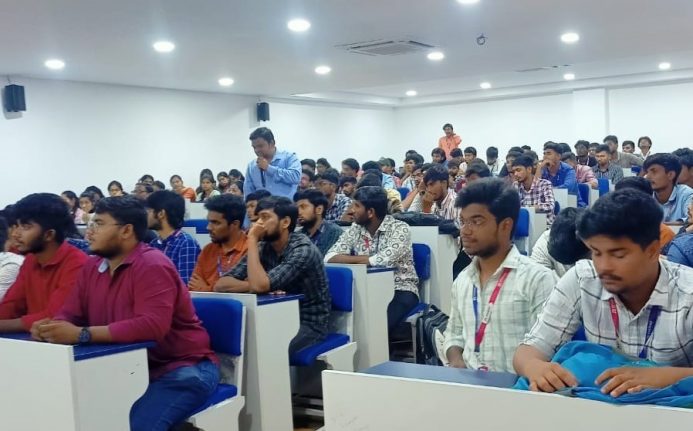
We partner with Govt. education departments and individual colleges to run outreach campaigns with students each year. Interested mentees sign-up, complete program eligibility activities on the app, and
submit income proof documents to demonstrate economic need.
Mentee Sign-up Process
Mentee sign-up on the Mentor To Go platform through outreaches at colleges/NGOs
Mentee onboarding through institutions
We partner with Govt. education departments and individual colleges to run outreach campaigns with students each year. Interested mentees sign-up, complete program eligibility activities on the app, and
submit income proof documents to demonstrate economic need.
Mentors learn about the program through their employers or networks. They sign-up, share information about their academic & career backgrounds, and complete mandatory mentor training.
Mentor onboarding to Mentor To Go platform
Mentors Sign-up Mentor To Go platform through corporate outreaches / word of mouth
Mentors onboard through employers/networks
Mentors learn about the program through their employers or networks. They sign-up, share information about their academic & career backgrounds, and complete mandatory mentor training.
Mentors & mentees are matched through algo-matching
Screened mentors and mentees are matched
by our app’s matching algorithm that reviews
compatibilities and recommends matches based on their preferences.
The algo-matching process
Mentors & mentees are matched through algorithmic matching.
Mentors & mentees are matched through algo-matching
Screened mentors and mentees are matched
by our app’s matching algorithm that reviews
compatibilities and recommends matches based on their preferences.
Mentorship starts with their pairs/groups that they chosen.
Once matched, mentors and mentees use the
work readiness activities on the Mentor To Go app to have discussions. Our staff monitor and support each mentoring match to ensure safety and Mentor Together quality.
Mentorship starts now
That's it, now starts the 6 months mentorship journey.
Mentorship starts with their pairs/groups that they chosen.
Once matched, mentors and mentees use the
work readiness activities on the Mentor To Go app to have discussions. Our staff monitor and support each mentoring match to ensure safety and Mentor Together quality.
We utilize standardised psychometric surveys and calculate effect sizes to quantify the impact of our mentoring program on mentees pre and post program.
We measure the following factors.
1
Career Decision Making
The scale helps measure structure and confidence in career decision-making, external barriers to a preferred choice of career, difficulty in choosing between several attractive choices, personal conflict in decision making etc.
2
Work Readiness
Work Readiness
The scale helps understand a mentee’s confidence in the knowledge about their field, their ability to apply what’s learnt, motivation to perform etc for the work competence.
3
Self Efficacy
Self Efficacy
This scale is to assess a general sense of self-efficacy -the optimistic belief in self.
This is the belief that one can perform new or difficult tasks, or cope with adversity.
4
Self Esteem
Self Esteem
The self-esteem scale helps measure how a mentee perceives themselves in relation to their friends, family, and their immediate social circle.
5
Career Networks
Career Networks
The scale measures the quality of the network and the level of trust & comfort the mentee has in reaching out to the network related to their career.
6
Gender Roles Attitude
Gender Roles Attitude
The scale tries to gauge the mentee's beliefs, values, and perceptions of what is appropriate or acceptable behavior for individuals based on their gender.
Our Impact so far
82%
of the mentee group post mentorship scored higher on their career decision-making ability than the average score of the mentee group pre-mentorship.
64%
of the mentee group post mentorship scored higher on their social intelligence than the average score of the mentee group pre-mentorship.
72%
of the mentee group post mentorship scored higher on their self-efficacy than the average score of the mentee group pre-mentorship.



















 Back